Mason Restoration, LLC provides water damage restoration services for residential and commercial properties in Savannah, GA.
Mason Restoration, LLC provides water damage restoration services for residential and commercial properties in Savannah, GA.
When a vertical riser pipe bursts or a heavy Savannah thunderstorm overwhelms a roof, your property doesn’t just face a maintenance issue; it faces a direct threat to its brand reputation. In the hospitality industry, every hour a room block remains offline is a measurable loss in revenue-per-available-room. You need a response that understands the nuances of a commercial environment—where guest comfort and business continuity are just as critical as the structural drying itself. Our crew focuses on rapid stabilization to prevent Category 3 water intrusion from migrating through floor assemblies and into guest suites below.
Savannah’s coastal humidity, often exceeding 80 percent, makes standard air moving insufficient for deep structural drying. We employ psychrometric drying principles and commercial desiccant dehumidifiers to pull moisture from dense materials like subfloors and wall cavities before mold can take hold. If you are managing a historic property in the Downtown District, you know that plaster walls and heart pine floors require a delicate touch. We use thermal imaging inspection to find hidden pockets of saturation without performing unnecessary ‘tear-outs’ that extend your renovation timeline.
Documentation is the bridge between your emergency and a successful insurance claim. Our technicians provide detailed moisture logs and a clear scope of loss that satisfies adjusters, allowing for insurance direct billing that reduces your out-of-pocket stress. Whether it is an HVAC condensate overflow in a mechanical room or a fire suppression system discharge in the lobby, we coordinate with your facility staff to work around occupied floors. You can learn more about our company and our commitment to IICRC S500 standards by speaking with our project managers today. We don’t just dry buildings; we restore your ability to host guests safely.
When a pipe bursts on a guest floor or a coastal storm pushes water into your lobby, the clock starts ticking against your RevPAR. You aren’t just dealing with wet carpets; you’re facing a direct threat to your property’s reputation and guest safety. Professional hotel water damage restoration in Savannah requires more than just a few fans and a shop vac. We use advanced moisture mapping and thermal imaging to find water that has migrated behind vinyl wallpaper, into elevator pits, or deep within subfloors. By identifying the exact scope of loss early, we help you avoid the nightmare of a secondary mold claim that could shutter an entire wing months down the road.
Savannah’s coastal humidity is a relentless variable that makes standard drying techniques often fail in a commercial setting. We deploy commercial desiccant dehumidifiers to create a controlled environment, moving beyond simple evaporation to true psychrometric drying. This is critical for Class 4 drying scenarios where water has saturated dense materials like hardwood or concrete. Our experienced technicians follow the IICRC S500 standard to ensure every guest room is clinically dry before your housekeeping team resets the furniture. We prioritize phased re-occupancy, working floor-by-floor so you can keep unaffected rooms in the booking pool and maintain your property’s cash flow during the process.
Rapid moisture mapping to prevent hidden mold growth behind expensive vinyl wallcoverings.
Phased restoration protocols that allow you to keep unaffected floors open for guest bookings.
Direct insurance billing with detailed scope of loss documentation to streamline the claims process.
Use of commercial desiccant dehumidifiers to combat Savannah's high ambient coastal humidity.
Comprehensive contents pack-out and storage to protect room furnishings and case goods.
Strict adherence to IICRC S500 standards for Category 3 water intrusion and sanitary safety.
Reopening guest rooms after a Hotel Water Damage Restoration event in Savannah depends heavily on the “Class” of water intrusion and the materials involved. For a standard Class 2 scenario—like a localized pipe burst affecting carpet and drywall—you are typically looking at three to five days for full structural drying. We prioritize psychrometric drying techniques to stabilize the environment quickly. By using commercial desiccant dehumidifiers rather than standard refrigerant models, we can often hit dry standards faster, even with Georgia’s high ambient humidity. Our team monitors moisture mapping data daily, providing you with the exact moment a room is safe to return to service. This data-driven approach ensures you aren’t losing revenue-per-available-room a minute longer than necessary while guaranteeing no hidden pockets of moisture remain to cause future mold issues.
We understand that a full property closure is rarely an option for a busy hotel. During Hotel Water Damage Restoration in Savannah, our crew works in phases to minimize the footprint of our equipment. We use quiet, portable extraction units and high-efficiency air movers that allow us to isolate specific corridors or floors. By setting up floor-to-ceiling tensioned plastic barriers, we keep the “construction look” away from your guests’ eyes. We also coordinate our loudest work—like heavy extraction or demolition of saturated subfloors—during mid-day checkout windows when the building is least occupied. This strategic scheduling helps protect your online reputation and guest experience scores while we handle the heavy lifting behind the scenes.
Most hospitality groups prefer a contractor who handles insurance direct billing to keep capital expenditures predictable. When we perform Hotel Water Damage Restoration, our experienced technicians generate a detailed scope of loss using the same software your adjuster uses. This includes moisture logs, thermal imaging photos, and IICRC-compliant documentation that justifies every piece of equipment on-site. You shouldn’t have to act as a middleman between the restoration crew and the insurance company. We communicate directly with your carrier to ensure the claim is processed smoothly. While the policyholder is responsible for the deductible, our comprehensive documentation helps ensure the rest of the remediation costs are covered according to your policy limits, preventing unexpected out-of-pocket expenses for your Savannah property.
In the coastal climate of Savannah, the clock ticks faster. Because our local humidity often exceeds 80 percent, Category 3 water intrusion can lead to mold growth in as little as 24 to 48 hours. During Hotel Water Damage Restoration, we apply EPA-registered antimicrobial treatments to prevent fungal spores from taking hold in wall cavities. If your property is older, such as a boutique hotel in the historic district, we take extra care with plaster and lath materials that trap moisture. It is vital to work with a team that understands the Georgia regulatory environment regarding indoor air quality and environmental safety. We don’t just dry the surface; we manage the vapor pressure of the entire room to ensure that “dry” actually means dry by professional standards, not just dry to the touch.
Facility managers often fear that Hotel Water Damage Restoration means gutting every room. That isn’t always the case. We use thermal imaging inspections to “see” moisture trapped behind wallpaper or inside wall cavities without drilling holes. If we catch the intrusion early, we can use specialized wall-venting systems or floor-mat drying tools to save expensive finishes and hardwood. However, if we encounter Category 3 water—like a sewage backup or storm surge—the IICRC S500 standard requires the removal of porous materials like carpet pad and low-grade drywall to ensure guest safety. Our goal is always to save what can be saved and only remove what is necessary to prevent long-term structural rot or health liabilities for your Savannah guests.
Every hour a block of guest rooms remains offline, your property loses direct revenue and risks a wave of negative reviews that can haunt your brand for months. We understand that in the Savannah hospitality market, you cannot afford a full property closure just because of a burst pipe or an HVAC overflow. Our experienced technicians specialize in phased restoration, allowing us to perform moisture mapping and structural drying on affected floors while your front desk continues to check in guests on the others.
Don’t let a Category 3 water intrusion or a simple laundry room flood turn into a long-term liability. We provide the detailed scope of loss documentation and IICRC S500 compliant moisture logs your insurance adjuster requires for a smooth claim process. Contact us now to stabilize your building, protect your furnishings, and get your rooms back into the inventory rotation immediately.
In the hospitality industry, every hour a block of guest rooms stays offline is a direct hit to your revenue-per-available-room. But the financial bleeding doesn’t stop at the daily rate. When a pipe bursts or a storm triggers a Category 3 water intrusion in a Savannah hotel, you aren’t just fighting a puddle; you’re fighting a ticking clock against microbial growth and structural rot. Savannah’s coastal humidity often exceeds 80 percent, which means standard evaporation doesn’t happen on its own. Without professional intervention, that moisture becomes trapped in specialty carpet padding and behind vinyl wallcoverings, leading to a mold claim that could void your insurance coverage and ruin your property’s reputation.
We don’t guess if a room is ready for guests; we prove it through rigorous psychrometric drying and detailed moisture mapping. Following the IICRC S500 standard is non-negotiable for commercial properties because it provides the scientific framework needed to handle Class 4 drying scenarios where water has saturated deeply into subfloors or structural masonry. Because we hold a Georgia mold remediation contractor license, our team understands the strict disposal protocols and antimicrobial treatments required to keep your facility compliant with local health codes. We use commercial desiccant dehumidifiers to pull moisture out of the air even when the Georgia heat is at its peak, ensuring your building materials reach their dry standard before the first sign of a musty odor appears.
Managing a hotel during a crisis requires a partner who understands business continuity. You cannot afford to shut down the entire property for a localized leak on the fourth floor. Our crews are trained to coordinate with your facility managers, using portable extraction units and containment barriers to work discreetly around occupied floors. We focus on phased re-occupancy, prioritizing the drying of corridors and high-traffic banquet halls so your staff can maintain service levels. Throughout the process, we generate the scope of loss documentation and moisture logs your insurance adjuster needs, removing the administrative burden from your procurement team and ensuring the claim moves forward without unnecessary friction.
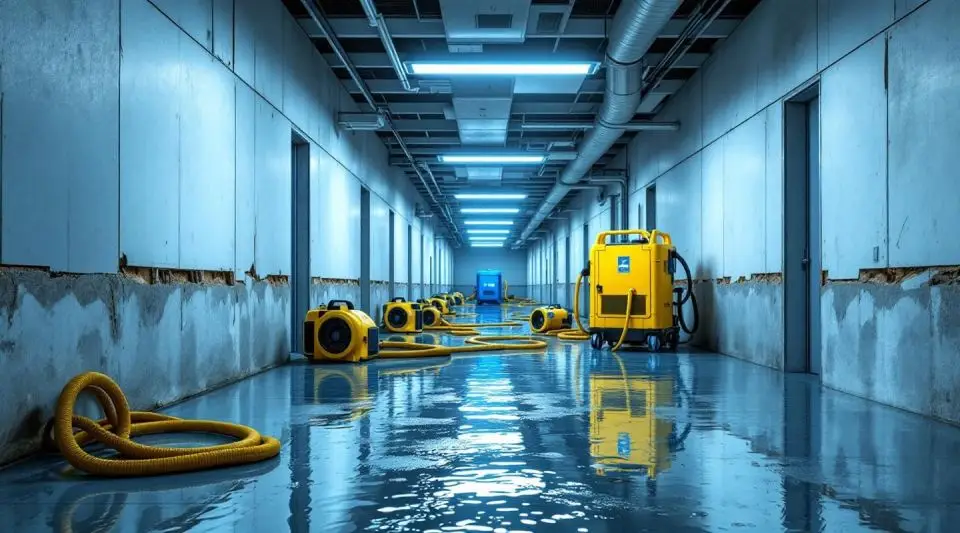
Our specialized team provides immediate 24/7 emergency response for San Diego commercial properties, utilizing advanced moisture detection and high-capacity extraction tools to eliminate standing water and prevent costly business interruptions.
Learn more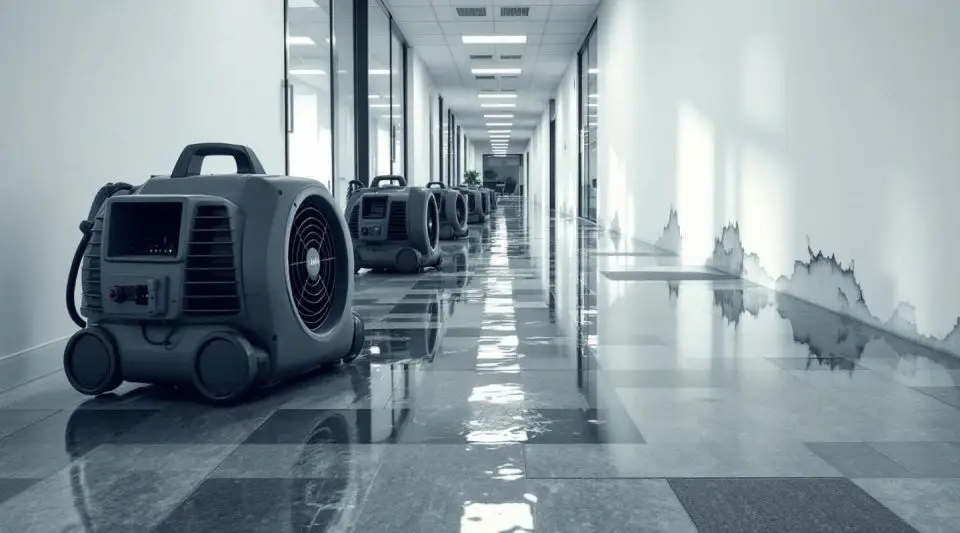
When a building envelope breach or a pressurized pipe burst occurs in a Savannah office complex, the clock starts ticking against your bottom line.
Learn more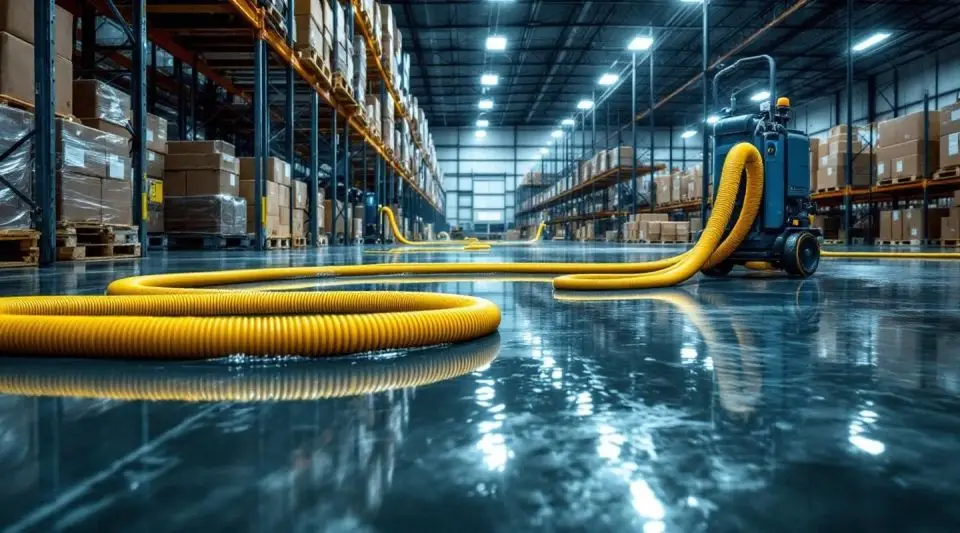
When a main fire suppression line bursts or a coastal Savannah storm pushes floodwater through your loading docks, the clock starts ticking against your bottom line.
Learn more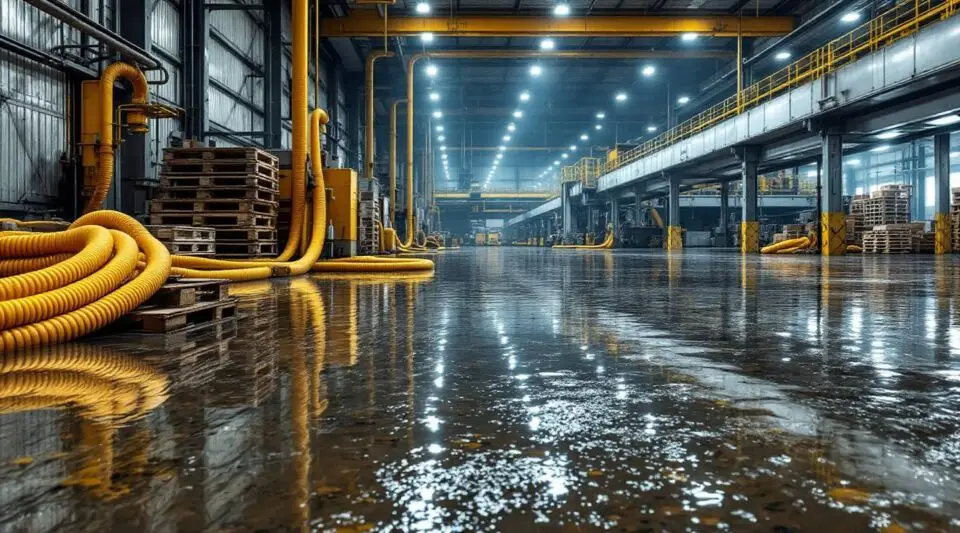
Savannah’s industrial landscape, stretching from the logistics hubs near the Port to the manufacturing corridors of Chatham County, faces a unique set of water-related risks.
Learn more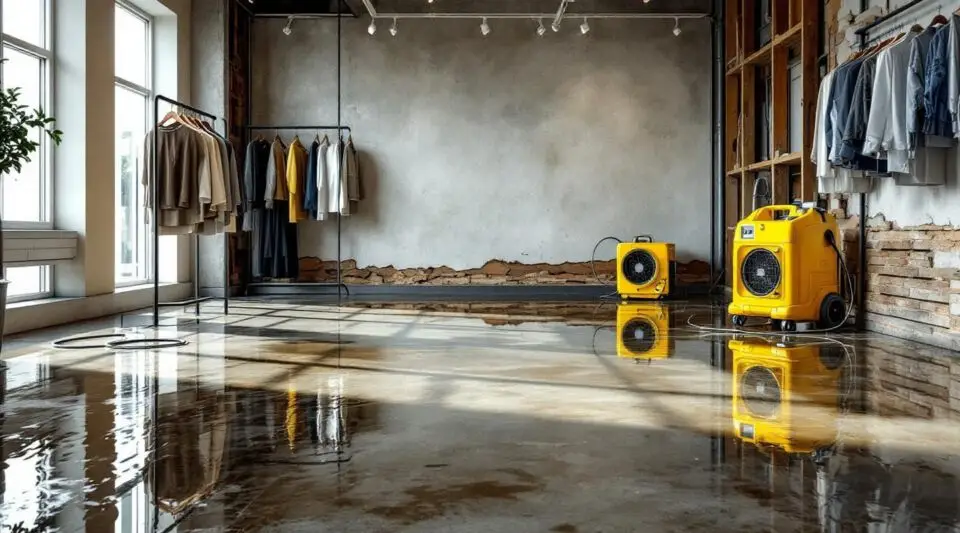
When a water main snaps or a coastal storm surges into your storefront, the clock starts ticking against your inventory and your bottom line.
Learn more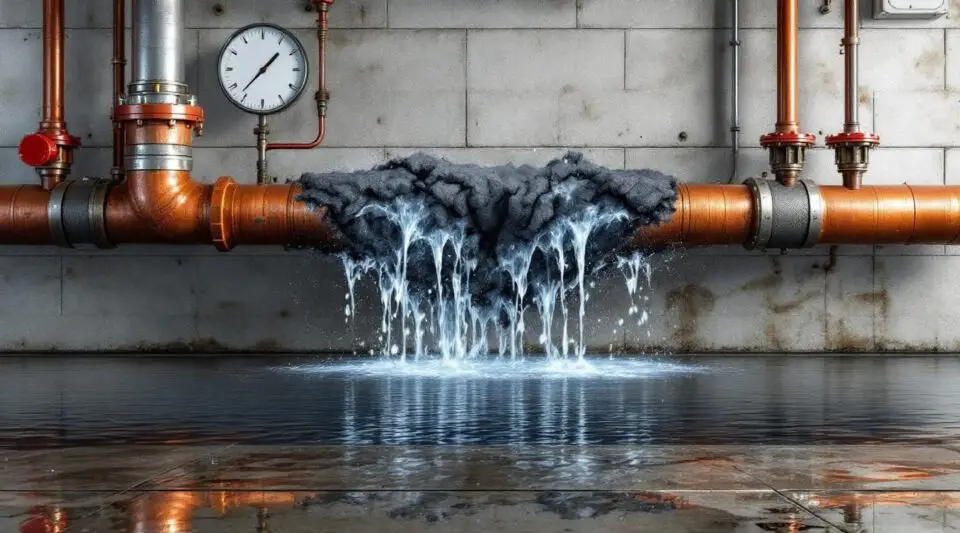
A pressurized pipe failure in a commercial setting is never just a simple leak; it is a high-stakes race against the clock to prevent a building envelope breach from compromising your entire operation.
Learn more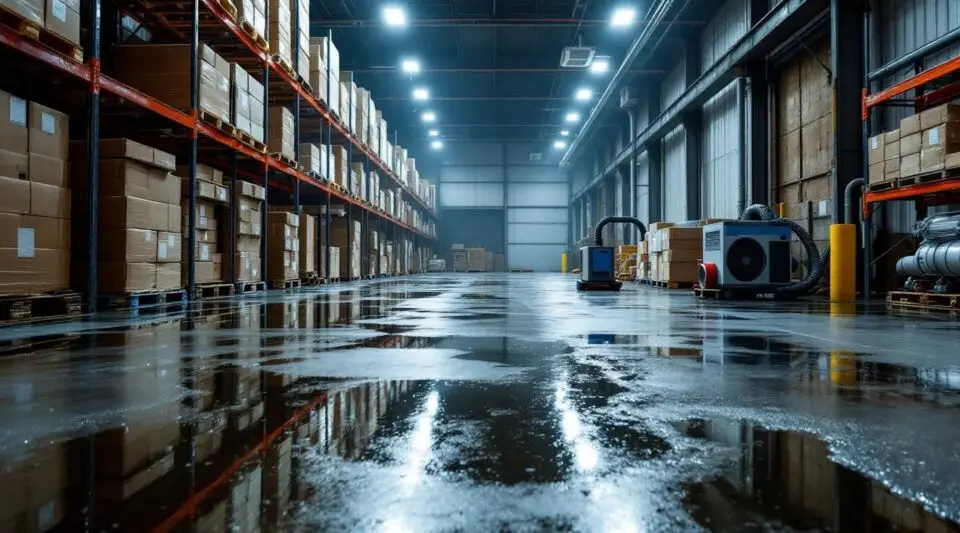
Our specialized team delivers rapid water extraction and industrial-grade structural drying to protect your inventory and restore your San Diego commercial facility to full operation after a flood.
Learn moreWe loved how soon they got back to us and how well they looked at the water damage in our kitchen and the rooms around it.
Lela Wenner
Their workers dried out our walls and ceilings quickly and showed us how to fix the flood damage step by step.
MOVIL CUATRO
They helped us file a claim for water damage with our insurance carrier, which made it quick and stress-free.
Ginger Nguyen
My basement flooded after a big rain, and it quickly became too much for me to handle. The restoration company I called did everything in a very orderly way. They first got rid of the standing water, and then they worked on drying the soil completely. I liked how they used tools to find wet spots that I wouldn't have seen. The workers were polite when they came to my house and worked quickly but not too quickly. They also talked a lot about how important it is to stop mold, which made me trust their plan. From start to finish, it felt like a professional job.
Dina McKeen
The water in our basement was gone before it could do any real damage because they got there so fast.
Sandra Sullivan